



 Spas & Wellness
Our bones and joints demand regular structural tuning to keep us moving freely as we age. Traditional Thai Massage: Everything You Need to Know offers a physical blueprint for those who want to reclaim bodily harmony and clear a crowded mind.
This centuries-old system blends targeted pressure points, Indian wellness traditions, and guided yoga stretches to dissolve stubborn muscular knots. Studying Traditional Thai Massage: Everything You Need to Know helps people make smart choices about their natural wellness habits.
Traditional Thai Massage: Everything You Need to Know – History and Origins
The lineage of this hands-on therapy stretches back two and a half millennia to ancient India. Early records point to a doctor named Shivago Komarparaj, a close peer of the Buddha, as the founder.
When Buddhist teachings spread throughout Southeast Asia, these healing methods followed the same pathways. The various techniques eventually merged in Thailand, carved into stone walls at Bangkok’s Wat Pho temple to preserve them for generations.
- Indian wellness traditions focusing on vital energy flows.
- Chinese medical ideas regarding meridian pathways.
- Local Thai plant remedies combined with quiet contemplation.
Core Techniques of Traditional Thai Massage: Everything You Need to Know
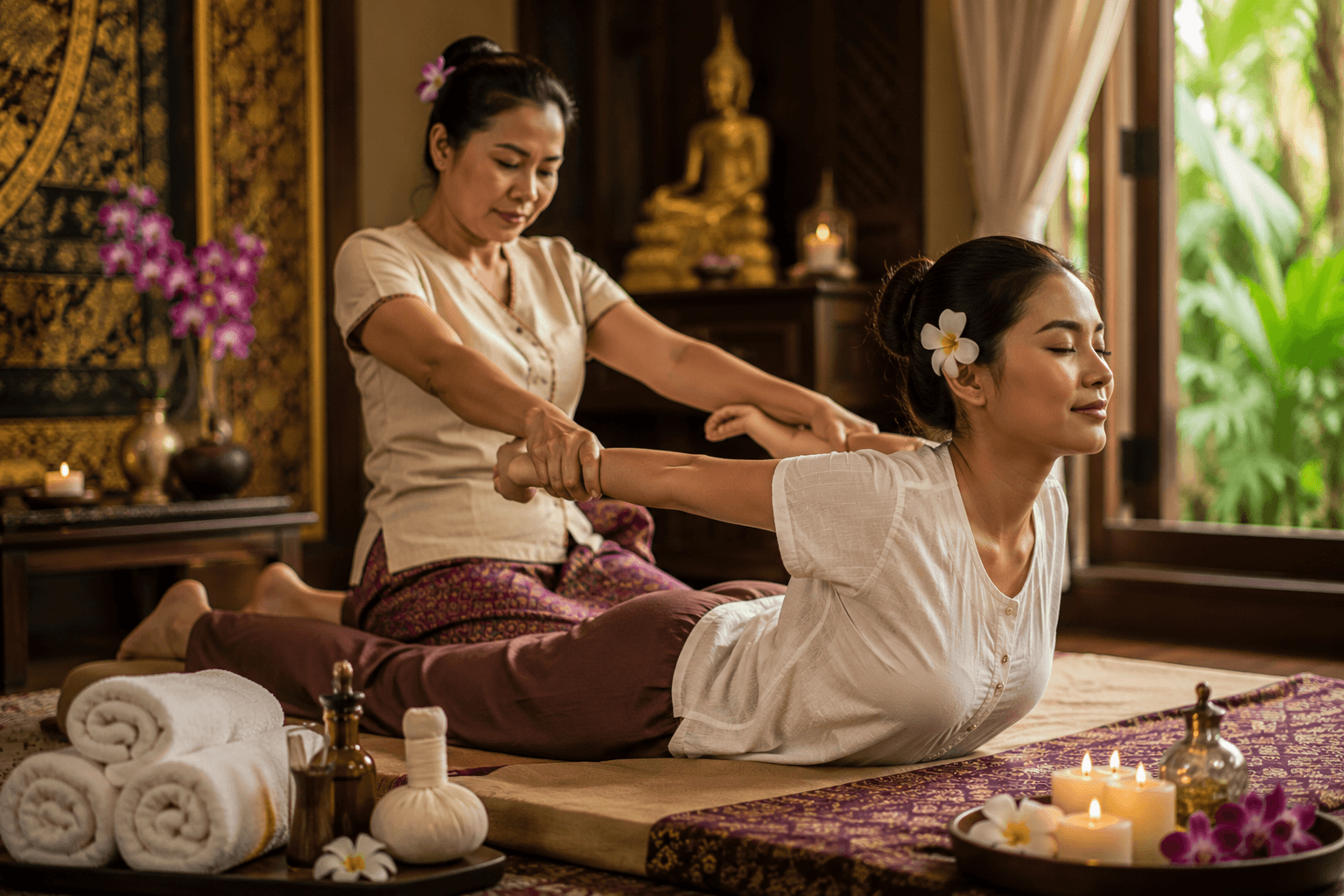
Western massage relies on sliding strokes, but this Eastern practice avoids greasy creams and oils altogether. The therapist applies rhythmic, heavy pressure along pathways known as Sen lines using their hands, elbows, knees, and feet.
You stay dressed in loose, comfortable clothing while resting on a thick floor mat. This ground-level setup lets the therapist lean in, using their own body weight to guide deep structural shifts.
| Feature | Thai Massage | Swedish Massage |
|---|---|---|
| Clothing style | Fully clothed in loose outfits | Undressed under a sheet |
| Lotions and oils | None used | Oils and lotions applied |
| Physical space | Padded floor mat | Elevated massage table |
| Main Technique | Passive stretching and acupressure | Long gliding strokes and kneading |
This active style helps loosen tight joints and coaxes a much broader range of motion from your body. Constant, flowing motion separates this art from typical stationary bodywork.
Health Benefits of Traditional Thai Massage: Everything You Need to Know
Research in the Journal of Bodywork and Movement Therapies shows that this treatment offers real relief to people living with persistent muscle tightness. The patterned, yoga-like stretches lengthen the spine and limber up the limbs.
Wellness experts point to Traditional Thai Massage: Everything You Need to Know as an excellent way to quiet a racing mind. Constant sessions help calm the nervous system and steady a rapid pulse.
- Boosted lymphatic flow to clear out cellular waste.
- Lower stress hormones in saliva, proving the body is winding down.
- Better blood flow caused by firm, physical pressure on major blood vessels.
- Eased tension headaches by concentrating on specific spots around the neck and head.
Preparation and Aftercare for Traditional Thai Massage: Everything You Need to Know
A typical session runs from one to two hours, giving the therapist plenty of time to work from head to toe. They will gently bend and stretch your body while helping you breathe in a slow, steady rhythm.
Before scheduling, getting familiar with Traditional Thai Massage: Everything You Need to Know helps you prepare for the hands-on nature of the session. The therapist will actively manipulate your body and apply heavy pressure to get the best results.
- Starting with foot cleansing to prepare for the session.
- Gradual leg and hip compression starting at the ankles and working upward.
- Mild twists and back bends to expand the ribcage.
- Head and shoulder pressure work to finish the session in total calm.
Getting ready the right way makes the experience much more enjoyable and keeps your stomach quiet during deep stretches. Try to avoid eating heavy food for at least two hours before your appointment.
Drinking plenty of water afterward is vital for flushing out your system. You might feel some mild muscle soreness the next day because of the intense physical stretching.
Soaking in a warm bath with Epsom salts can ease tight spots and extend that relaxed feeling. A light stroll after you leave the studio will keep your joints moving freely.
Embracing Traditional Thai Massage: Everything You Need to Know for Long-Term Health
Welcoming this historical art into your life builds physical strength and quietens the mind over time. This detailed look at Traditional Thai Massage: Everything You Need to Know gives you the tools to start your personal path to wellness.
Ongoing sessions build a centered body and a quiet mind. Booking with a certified professional ensures you get a safe, highly useful routine.


Comments are closed