




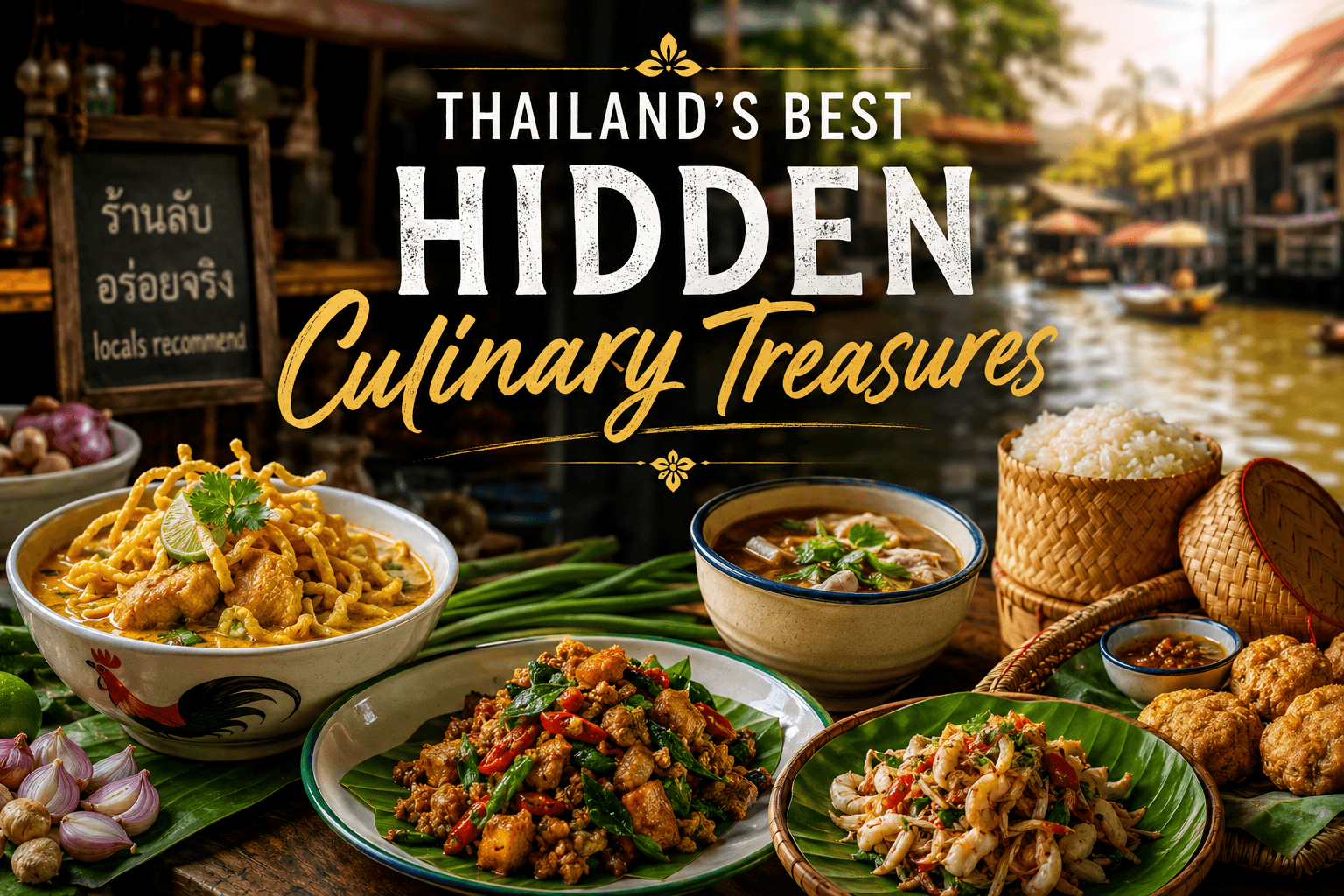
 Hidden Gems
Local culinary traditions in Southeast Asia reach far beyond the familiar noodle plates and sweet curries found in busy tourist districts. True regional cooking thrives instead within quiet alleys, provincial family kitchens, and distant village markets. This guide highlights how to locate Thailand’s Best Hidden Culinary Treasures for those seeking true regional flavors.
Exploring these eating establishments offers a direct link to generations of oral recipes. Food lovers can bypass tourist traps to observe heritage cooking methods first-hand.
Those who seek out Thailand’s Best Hidden Culinary Treasures discover how local history shapes daily meals. Every province preserves specific methods that define their local identity.
Northern Recipes and Thailand’s Best Hidden Culinary Treasures
The highland geography of the north helps preserve legacy preparation styles dependent on forest foraging and slow simmering. Cooks in provinces such as Mae Hong Son and Chiang Rai prepare dishes that rarely find their way onto tourist menus. These preparations depend on wild herbs and animal fats rather than coconut milk.
A prime example remains Kaeng Hang Le, a slow-simmered pork stew flavored with ginger, tamarind, and pickled garlic cloves. This dish traces its origin to historical trade with neighboring Burma, resulting in a thick, tart gravy. The absence of coconut cream sets this apart from central curries.
Another regional specialty is Larb Kua, a pan-fried minced meat dish seasoned with dried spices. Unlike the tart northeastern variant, this northern style relies on a dry spice blend containing native peppercorns and forest seeds. The heat is deep and lingering rather than sharp and immediate.
- Kaeng Hang Le: A slow-cooked pork stew flavored with ginger, pickled garlic, and sour tamarind.
- Larb Kua: A dry-spiced minced meat preparation seasoned with local mountain seeds.
- Nam Prik Num: A charred green chili paste eaten alongside crispy pork rinds and boiled regional greens.
Savoring Isan Traditions and Thailand’s Best Hidden Culinary Treasures
The dry plains of Isan showcase sharp, fermented profiles born from agricultural ingenuity. These farming communities harbor some of Thailand’s Best Hidden Culinary Treasures where preservation methods turn humble river catch and wild greens into pungent meals. Salt, rice bran, and patience form the core of their pantry.
A seasonal luxury here is Goi Khai Mot Daeng, a cold dish made from red ant eggs gathered from mango trees before the monsoons. The eggs offer a burst of moisture and a clean, citrus-like sourness that balances local herbs. Locals gather these by hand during the hot dry months.
Another local dish is Mok Pa, consisting of freshwater fish coated in dill, lemongrass, and ground sticky rice paste. Cooks wrap this mixture in fresh banana leaves before steaming it over slow coals. This technique traps the moisture and aromatic oils inside the leaf packet.
- Goi Khai Mot Daeng: A seasonal cold preparation of red ant eggs and wild greens.
- Mok Pa: Steamed river catch seasoned with fresh dill, wrapped securely in banana leaves.
- Pla Ra: A long-cured fermented fish paste that provides the savory base for Isan broths.
Coastal Communities and Thailand’s Best Hidden Culinary Treasures
The southern peninsula delivers intense heat and abundant seafood influenced by centuries of Indian Ocean trade. Seaside villages in Trang and Songkhla serve dishes that stand apart from common tourist menus. These fishing outposts are excellent spots to seek out Thailand’s Best Hidden Culinary Treasures due to their access to daily fishing hauls.
Khao Yam is a colorful rice salad tossed with toasted coconut flakes, sour green mango, and a dark fish sauce dressing known as Budu. The recipe requires wild leaves that offer bitter notes and traditional wellness benefits. Every family guards their own specific ratio of this complex sauce.
An intense culinary encounter is Kaeng Tai Pla, a dark, heavy stew of fermented fish viscera, bamboo shoots, and eggplant. Cooks use fresh turmeric to offset the strong seafood flavor and build a lingering heat. This stew pairs naturally with fresh raw vegetables to cool the palate.
- Khao Yam: A cold rice dish tossed with native leaves, raw vegetables, and savory Budu dressing.
- Kaeng Tai Pla: A very hot stew prepared with cured fish viscera and local garden vegetables.
- Khua Kling: A dry-fried minced meat curry heavily scented with slivered kaffir lime leaves.
Locating Central Thailand’s Best Hidden Culinary Treasures
The central plains house historic canal networks where riverside communities maintain old palace cooking methods from previous centuries. In markets across Samut Songkhram and Ratchaburi, vendors prepare intricate recipes requiring hours of careful labor. Finding Thailand’s Best Hidden Culinary Treasures in these historic waterways means looking past modern shops to find elderly cooks.
Kaeng Ranjuan is a vintage beef or pork soup originating in the palace kitchens of King Rama V. The broth is seasoned with leftover chili shrimp paste dip, lemongrass stalk, and sweet basil leaves. This combination yields a balanced sour, salty, and spicy broth.
Mee Krob is a traditional sweet and sour noodle dish featuring crisp rice vermicelli. Old recipes rely on Som Sa, a scarce local citrus fruit, for its specific aroma and sharp rind flavor. Modern substitutions of lime or vinegar fail to replicate this classic profile.
- Kaeng Ranjuan: A historical court soup flavored with shrimp paste condiment and local herbs.
- Mee Krob: Crispy rice vermicelli coated in a sweet-tart glaze scented with Som Sa citrus.
- Chor Muang: Hand-pinched blue flower dumplings stuffed with sweet and savory seasoned chicken.
Practical Tips for Finding Thailand’s Best Hidden Culinary Treasures
Finding these eating places requires observation and familiarity with local dining habits. Visitors should search for the bowl-shaped Shell Shuan Shim symbol, a classic culinary marker of excellent street stalls. This local award predates western rating guides by decades.
Wandering through city morning markets before sunrise reveals local cooks preparing fresh breakfast foods that disappear by mid-morning. These early hours offer access to steamed snacks and regional rice broths. Most of these vendors close as soon as their single pot empties.
Conversing with neighborhood shopkeepers often yields better results than using online navigation tools. Many small family kitchens operate without signs or digital maps. They survive purely on word of mouth from regular patrons.
| Region | Dominant Taste | Classic Herb |
|---|---|---|
| Northern Thailand | Earthy and Bitter | Prickly Ash |
| Northeastern (Isan) | Spicy and Fermented | Dill |
| Southern Thailand | Fiery and Salty | Turmeric |
| Central Thailand | Sweet and Sour | Lemongrass |
- Search for the Shell Shuan Shim Emblem: This blue bowl sign represents a local stamp of approval.
- Explore Morning Bazaars: Go between dawn and sunrise to catch vendors selling freshly steamed breakfast items.
- Walk Away From Main Streets: Moving three blocks from main tourist avenues reveals modest kitchen stalls serving local families.
Eating local preparations requires a willingness to walk away from major hotels. Highland stews, Isan ant egg dishes, southern leaf salads, and central palace recipes illustrate the vast culinary diversity across the country.
Seeking out these local kitchens changes a simple holiday into a true cultural education. Visitors gain a real appreciation for the slow methods and historical events that shaped local eating habits.

Comments are closed